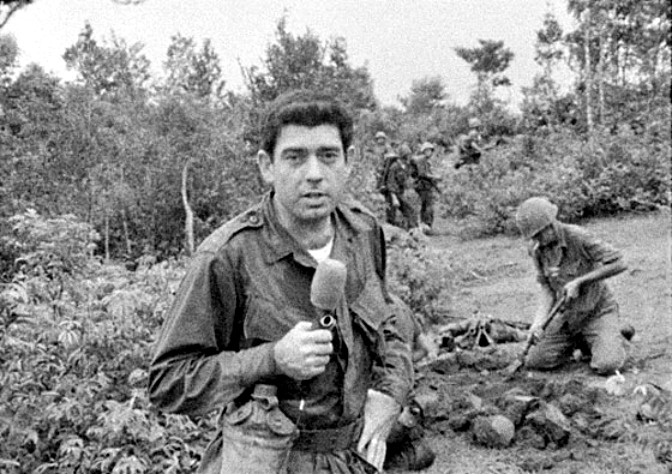
Courage to be Dan Rather

This post is for all you under 40 PR/comm types out there. When I was growing up, the Vietnam War played nightly on Walter Cronkite. Then, Watergate was the top story that consumed the national discussion. Through it all, Dan Rather was on location or in the anchor chair. Remember this was before cell phones and the internet gave us a 24/7 news cycle and people actually stopped what they were doing to watch the evening news.

For those of you who live and die by the feed on your cell phones, this was important because what happened on the evening news was a shared experience. It’s how we were updated on that day’s news, then we read the details in the next days’ newspaper (remember newspapers?). No Twitter postings* from un-vetted “news sources” or opinion leaders who might or might not have all the facts. It was widely regarded as objective reporting from trained journalists.

So why care? Do yourself a favor and watch the documentary Rather. Go ahead and make fun of Dan Rather for his good looks, his stupid sign off (Courage), or his epic mistake and departure from CBS…but this was the peak of TV journalism. And the guy is 92 and still in the game posting coherent comments on Twitter and other platforms. I love a second act.

Watergate, Woodward/Bernstein, and the aftermath made me want to be a journalist. Dan Rather’s documentary shows how TV journalism was before cell phones made everyone an alleged reporter. Watch it.

*I will NEVER call Twitter “X” because it’s just stupid.

Tik Tok Boom.

This is the day I shake my head and graduate to full-on old fogie. Read this report by Reuters (a trusted, legacy media source) about how a growing number of young people are turning to TikTok for news and information. The platform launched by the Chinese company Bytedance has graduated from dancing videos to delivering the news and, as one user reported, “…where it lacks in trustworthiness, it excels in presentation.”

Ok, all together now: face palm.

Why should you care? Because tomorrow’s voters and tomorrow’s wage earners are getting “news” that is increasingly created by individuals and organizations that have a high potential for dis- and misinformation. Never mind that venerable organizations like the BBC, the Washington Post, and the 4-Cs (ABC, NBC, CBS, CNN) have all entered the fray, it’s the creators who are not journalists that should make you cringe.

“…others fear that the ‘TikTok-ification of news’ risks trivialising important stories as well as undermining business models that depend on referral traffic from social networks.”

Journalists are trained to present information in a vetted, objective format. There’s a certain trust that legacy media outlets are telling the truth and have checked their sources. Unfortunately, other producers on TikTok are masquerading as real, live reporters.

I’m not proposing that all journalists are trustworthy, but repeated surveys by Reuters, the Pew Center for Journalism, and other platforms regularly rate the bias of legacy news organizations. You’d be surprised to learn that most well-known outlets are ranked in the middle of the pack in terms of bias.

That’s why they’re looking for fresh, young content creators to bend the rules of journalism in a balance between objective reporting and humor-filled TikTok reels. Fifty years ago, television was the new medium hiring journalists who actually looked attractive to deliver news on the air. Broadcasters were criticized for hiring pretty people to deliver the news. Now hoodie-wearing millennials are cheerfully presenting information to attract the elusive  younger market—a market that is increasingly more difficult to target.

TikTok as a news platform? Where’s that “freedom of the press thing” in China?

If you’re interested, find me at mkathrynschmidt@gmail.com.