Celebrating 20 years!

This is a day to celebrate! 20 years ago, I hung out my own shingle with a goal to focus on public relations and media work. At that time, daily newspapers were still healthy and it was before Instagram, TikTok, Facebook ads, and the same year YouTube was launched.

I soon learned that my services were not about what I thought I wanted to do, but all about what the client needed. Some needed a marketing director for hire, some needed a seasoned pro to teach their new staffers, some needed content creation, some needed video work, some needed media buying, and of course many needed PR.

When I started in communications, I was a reporter editing film stories at WISC TV in Madison. The anchorman at the time taught me how to tell a story in the least amount of time and still grab a viewers’ attention. The news director and assignment editor were patient with me after I shot WAY too much film during floor debate in the state assembly.

After meeting my future husband, I got a job as a news producer at WLUK TV in Green Bay where the industry was transitioning from film to video. Producing a live TV newscast teaches you everything about teamwork, creativity, speed, accuracy, relationships, and when to fall back on the old ways because the new-fangled stuff didn’t work.

Over the next years I had jobs as a writer, reporter, editor, producer, media buyer, account manager, pr director, mar/comm director, managing in-house agencies, and working in ad agencies. The catalyst to opening my own business was getting fired—that’s when I decided that I knew as much about the business as the people who would hire me.

There are so many people to thank over the last two decades and in doing so I will certainly omit someone, but here goes. Huge thanks to Paula Wydeven who was then at The Boldt Company, Amy Pietsch with the entrepreneur training program at FVTC, Donna Gehl at Image Studios, Sara Timm, too many nonprofits to mention, and thanks to my husband for carrying the insurance and all those necessary, boring things!

Finally, thanks to my clients—I love working with all of you and I have no plans to retire. After transitioning from film to video to digital, one thing is certain–no matter the time or technology: Schmidt Happens.


This post was NOT written by ChatGPT

Over the last few months, I’ve been experimenting with ChatGPT. I even asked it to write this article about how journalists could use ChatGPT and it spewed out 437 words on how it was a tool that could sift through vast amounts of information to uncover the truth. It even created fake story lines about make-believe journalists who used it to report stories that never happened. In short, a fairy tale.

Artificial Intelligence and ChatGPT learn grammar, syntax, semantics, and even some level of reasoning and context to mimic human speech and communications. They suck up existing information on the internet and regurgitate it according to the question you pose.

And we all know information on the internet is true, don’t we?

If there’s a data void, ChatGPT will usually not answer a question by saying it does not know the answer, but it will make up an answer. Unless you are extremely specific—I asked it “what is the future of land use in Cooperstown, Wisconsin” and it did reply As of my last update, I don’t have access to information about the specific future developments or plans for land use in Cooperstown, WI.

The reality is most journalists are in the business of reporting new information (hence the term “news”). If they’re local reporters, chances are the internet data dump does not have the latest info on the workings of a local school board or a common council or a court proceeding.

So will ChatGPT supplant local journalism? The reality is scooping information off the internet cannot be trusted. We will still need reporters and editors to vet information, double check sources, or to present the human impact of the news.

Just ask ChatGPT—it’ll tell you that AI models “may not be able to fully replace local news.” At least that much is true.

Tik Tok Boom.

This is the day I shake my head and graduate to full-on old fogie. Read this report by Reuters (a trusted, legacy media source) about how a growing number of young people are turning to TikTok for news and information. The platform launched by the Chinese company Bytedance has graduated from dancing videos to delivering the news and, as one user reported, “…where it lacks in trustworthiness, it excels in presentation.”

Ok, all together now: face palm.

Why should you care? Because tomorrow’s voters and tomorrow’s wage earners are getting “news” that is increasingly created by individuals and organizations that have a high potential for dis- and misinformation. Never mind that venerable organizations like the BBC, the Washington Post, and the 4-Cs (ABC, NBC, CBS, CNN) have all entered the fray, it’s the creators who are not journalists that should make you cringe.

“…others fear that the ‘TikTok-ification of news’ risks trivialising important stories as well as undermining business models that depend on referral traffic from social networks.”

Journalists are trained to present information in a vetted, objective format. There’s a certain trust that legacy media outlets are telling the truth and have checked their sources. Unfortunately, other producers on TikTok are masquerading as real, live reporters.

I’m not proposing that all journalists are trustworthy, but repeated surveys by Reuters, the Pew Center for Journalism, and other platforms regularly rate the bias of legacy news organizations. You’d be surprised to learn that most well-known outlets are ranked in the middle of the pack in terms of bias.

That’s why they’re looking for fresh, young content creators to bend the rules of journalism in a balance between objective reporting and humor-filled TikTok reels. Fifty years ago, television was the new medium hiring journalists who actually looked attractive to deliver news on the air. Broadcasters were criticized for hiring pretty people to deliver the news. Now hoodie-wearing millennials are cheerfully presenting information to attract the elusive  younger market—a market that is increasingly more difficult to target.

TikTok as a news platform? Where’s that “freedom of the press thing” in China?

If you’re interested, find me at mkathrynschmidt@gmail.com.

Do this before you jump into social media

twitterAt the risk of getting flamed on my Twitter account, I’m going to utter social media blasphemy: I’m not completely convinced social media is the communications messiah for some businesses. I’ve worked with a lot of business-to-business clients over the years, and in the rush to set up a Twitter account, many forget to take care of the basics of communications.

If your business targets a consumer market, then Facebook, Twitter, Instagram, YouTube are must-haves. But if you are selling parts to a manufacturer, or if you’re selling services to an industrial client, first take a good, hard look at some communications basics.

For most industrial & manufacturing busineses, trade associations, trade magazines/websites, and professional organizations are still the basics of communications. Fundamental tools like sell sheets, case studies and testimonials are the first tools you need to tell your story.

So before you open up an Instagram account, consider these pointers for online communications in the B2B world.

Know how your customer consumes information. If your customer is like a normal professional, they have a full in-box, a full voice mail, and they spend their day putting out fires. There’s a stack of professional journals flagged for review on an airplane while they’re traveling to a customer location. Facebook is not on their agenda and, if they are checking websites, its likely on their smartphone.

Triage your website content. Assuming you have a website (and you should), review your content and make sure you’re communicating in an understandable voice. If your only customer is a materials engineer, I’ll give you a free pass to write on a professorial level. But if you’re communicating with a range of customers in an industry, be sure your message is clear—which means limiting jargon, abbreviations and acronyms. Clearly explain how your product/service is different from competitors and the benefits you will provide your customers.

Tell a story. We are bombarded by thousands of messages daily and the best way to grab someone’s attention is to tell a story about your business. Perhaps it’s a case study of how you solved a problem for a customer or why you started your business, but communicate something beyond listing your products.

Make your website mobile. Most industrial and manufacturing professionals are running their business off of their smart phones and if your website is not optimized for that platform, you’re losing business.

Use your website as a publishing platform. Your website should not be a static document—it should be a content hub. This means you need to update information regularly and the most common way to do that is through a blog. Once you develop topical blog content, you can drive target consumers and trade journalists to learn more about your company, products and services through a judicious use of social media.

If you do nothing else, do LinkedIn. I used to dismiss LinkedIn as a boring version of Facebook but changed my tune once I invested time into it. That’s the key—you only get out of LinkedIn what you put in. Individuals must participate and that means you or key team members in your organization must take the time to develop a robust profile, then start interacting on the platform. Many industries are surprised by the professional groups, alumni organizations, events and discussions that can be found on LinkedIn—but only if you participate.

One more reality of LinkedIn—this is a platform that is based on the individual, not an organization. People link to people first and through those personal connections build a network. Often the biggest hurdle is to convince your team members they need to take time for LinkedIn, but you don’t need to invest an hour a day; start with investing one hour a week.

Before you rush into social media because your competitor is tweeting, stop and consider if you’ve done the basic blocking & tackling of talking to your customers. If all of this gives you a massive headache, drop me a line at mkathrynschmidt@gmail.com and we’ll talk. Or tweet.

.

Attention PR Skeptics: read this!

HCBBIf you think PR is a warm, fuzzy effort that you can do without, read what just happened this morning.

My brother is a partner in Healthcare Bluebook, a company founded on transparency. It functions much like the Kelly Bluebook used by car buyers for decades: the firm combines cost and quality data to provide consumers with price ranges for typical health costs by market. Want to know the going rate for a laparoscopic hysterectomy in Green Bay? The website healthcarebluebook.com will give you an average fair price and allow you to drill down into the details. Finally, consumers know what a medical adventure could cost.

This morning, the TODAY Show did a segment on “knowing your health care costs” and mentioned Healthcare Bluebook. It was about 15 seconds of content and was wrapped in with other consumer information, but it was succinct and informational. I stopped my workout and applauded my brother’s PR team, then immediately texted him.

His response: they didn’t know why there was a huge spike in traffic on their website. The segment ran just before 8 am, but the spike continued.

For those of you who think PR has no bottom line value, this 15 second mention drove consumers to his website to learn more. Consumers made the decision to seek out valuable content and hopefully engaged with the website for a period of time. Did this happen overnight? No. Meaningful press coverage is the result of a great idea, tailoring an existing message to a journalist’s audience, connecting with producers to pitch a relevant story and follow up, follow up, follow up. That 15 seconds could drive more eyeballs to your website than any one ad, but it requires planning and establishing relationships with real journalists.

My brother’s firm has an excellent PR team that has been with them since their inception. They are part of the strategic group and have developed a communications strategy hand in hand with the business strategy. This is a critical element of success because it allows the PR team to be responsive and flexible with the media, yet manintain a consistent message that upholds the organization’s mission. As a result, Healthcare Bluebook has been featured in national business publications, major U.S. daily newspapers and the holy grail of business journalism, the Wall St. Journal. For millenials out there, the content was also on the digital platforms!

billyMeet my brother, Bill Kampine. He is co-founder and senior vice president for Healthcare Bluebook and I am off the charts proud of him!

If you’re interested, find me at mkathrynschmidt@gmail.com.

Be resolved: really communicate with media

calanderMost of you will forecast sales, expenses, product introductions, and budgets for 2016, but let me ask you to spend some time on your communications planning. Most of the businesses I have worked with want more favorable or more impactful relationships with the press, yet they are often victims of their own (bad) habits. If public relations is part of your marketing objectives in the coming year, take a moment to review this list of New Year’s resolutions for communicating successfully with the media.

Resolve to create clear messages. Communicate in plain language that is easily understood by everyone, not just corporate leadership. Use language that is concrete rather than abstract thoughts and business speak that cloaks the real meaning. Rather than saying “We are committed to our employees…” try “Our benefits package and internal promotions show we invest in our employees.” Put more meat in your message and commit yourself to creating emails and press releases that present factual information supported by your in-house experts. Above all, eliminate jargon and business cliches that only have meaning for industry insiders or your operations team and communicate how your products and services will impact your customer’s life.

Resolve to end wordsmithing. In the interest of full disclosure, I hate that term. If you typically revise a press release ten times, you’re over complicating the process (see above). In most cases, journalists will not copy and paste your press release or email directly into their stories. That press release you labored over will be paraphrased, rewritten, or even used only for reference, so edit for clarity not pontification.

Resolve to end spin. Spin is dead thanks to the transparency of the internet.

Good journalists can sniff out spin and get to the truth of an issue simply by doing a Google search, so don’t throw a towel over the truth.

That doesn’t mean you need to reveal proprietary information, financial or strategic plans, or employees’ personal information—but you should present reliable information. A good friend of mine is an excellent, experienced reporter who will go the extra mile to re-state or paraphrase information just to get to the core of an issue, and she is rightfully proud of her ability to identify spin.

Resolve to tailor your messages. What you say to a business journalist may be very different from your message to a broadcast reporter. Understand the differences in financial media, trade press, social media and broadcast media and present information accordingly. Doing so will allow you to present different facets of a story to reporters and, hopefully, get more of your message out to your target audience. Not every press interaction needs to focus on your product or service—find a sliver of content that you think might interest a specific medium and contact that journalist.

Resolve to treat journalists like real people. Just like you, they’re doing their jobs to the best of their abilities. Provide thorough, vetted information and interviews with interesting experts who can add dimension to an issue. Understand their deadlines and provide information they can use in a follow-up report. Follow the reporters on social media and comment on their stories—maybe even say thank you. However, if a reporter gets information wrong or presents a misleading story, it is fair to contact them and discuss the issue. Most journalists want to present accurate information and will update a report on a website or run a clarification.

Resolve to read/follow media outlets. Now you’re asking “how can I fit one more thing into my day?” If your business is considering a public relations or community relations program, it’s a good idea to read the media outlets you wish to target. I know this sounds obvious, but many businesses don’t follow their industry trades or associations. Stay on top of news feeds, trends, and look at the stories covered in print, on websites, and on social media to determine if you also have information that’s worthwhile for the reporters and editors.

Business communications are no longer in a push environment where companies issue dozens of press releases and push information out to the media. Today we operate in a pull environment where compelling stories and two-way conversations engage the media in informative and impactful stories. Clarity, brevity and authenticity are the cornerstones of communicating with the press and building relevancy with journalists in the new year.

If you’re interested, find me at mkathrynschmidt@gmail.com.

Really, it’s not all about you

copy editThis is for all you business people who are on the 16th revision of a press release and are reworking the perfectly constructed corporate statement about a product introduction or a new project or an industry award. It really isn’t about you.

That press release with jargon or obtuse information is likely the first thing an experienced journalist will delete. Your first gatekeeper in getting any story out to the masses is the editor or reporter. This person likely gets a couple hundred emails and press releases a day. When they decide which stories will get a precious minute of air time or a few column inches, they’re taking many things into consideration. One of them is NOT your press release, your poetic phrases, or your schedule.

My client was able to get a feature story covered on a special award because the executives were flexible and available when the media needed them. A busy news weekend and conflicting logistics meant news crews had to compress coverage of an award event to get to another story an hour away.

The crews arrived early, they were able to finish interviews before the event, got the video they needed and were on the road in about 45 minutes.

The result? Coverage by the ABC and FOX networks in town, a feature story in an industry trade magazine and a feature story covered later by the daily paper.

When you think about hosting an event or creating a timeline, remember to plan in flexibility so your message is available when the media wants it—not when you need to deliver it.

If you’re interested, find me at mkathrynschmidt@gmail.com.

Copy. Paste. Now your info is mine.

copyright-culpritSo what do you do when a competitor uses your proprietary information?

Usually, I would tell a client to make sure information has a copyright © sign or they contact their attorneys. However, today everyone’s a publisher thanks to WordPress and everyone’s a journalist thanks to the internet. So “garage journalists” who don’t give a hoot about objectivity, attributing information to sources or vetting the facts will easily copy and paste your proprietary info into their blogs, Facebook pages or tweets.

Recently, we discussed exactly this situation at a business training program with entrepreneurs who have been in business 5-10 years. One businessman (we’ll call him Larry) publishes his own industry information and a competitor has been “borrowing” it liberally for his business without attributing it. Larry’s customers depend on his information and look forward to it in his emails and newsletters. Being a direct guy, Larry has personally asked the guy to stop taking his info.

Does he call a lawyer?

Perhaps. But our solution was to inform his customers and social networks of the situation and have the network get to work. Larry’s customers are fiercely loyal to him—because they are so deeply involved in his lifestyle, products and services they are likely to take this action personally. Larry’s a hard-working guy who lives and breathes his business—his passion attracts equally passionate customers.

You can do everything to protect your information, but often the best weapon is an engaged and committed customer base. Remember to involve your customer in your personal story so they become as dedicated to your product/business as you are. Get your customer involved by regularly communicating with them, presenting a compelling story and providing information that matters to their lifestyles.

I can’t wait to see what happens when his fans find out an interloper is falsely trading on Larry’s sweat-equity.

If you’re interested, find me at mkathrynschmidt@gmail.com.

I’ll give you a minute-15 for that story

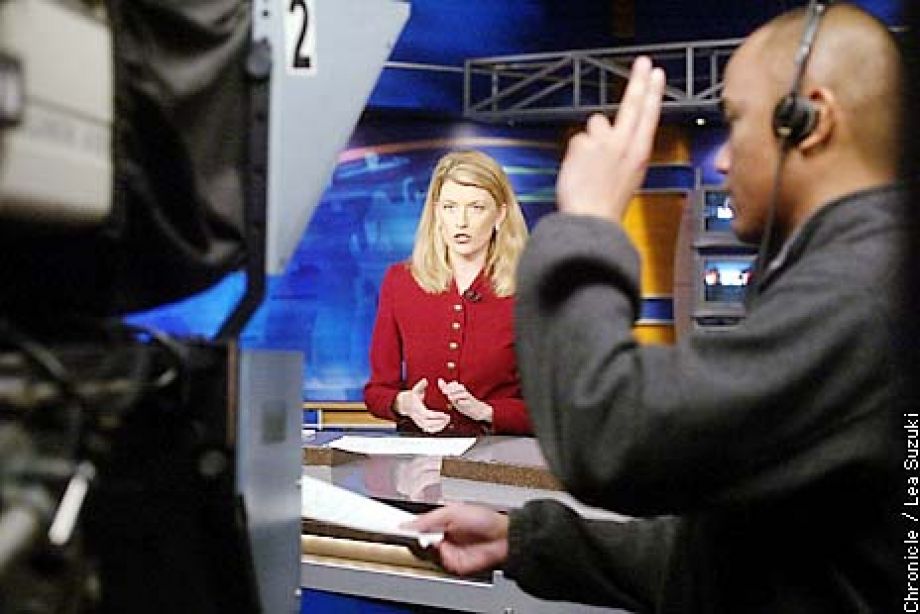
tv countdownA journalist friend and I were watching the TV news and after a chirpy, happy report the comment was, “Well, the plow doesn’t go into the ground very deep.” I snorted into my micro-brew and chewed on the evolution of news.

My first news director tossed the state budget at me and told me to find three good stories we could cover that week. These were the days before the internet, even before computers. We had to read through pages of coma-inducing text to find interesting nuggets, prepare a brief on the story with pro and con sources and propose visuals to film. Did you notice I said film instead of video? Look it up on Wikipedia.

My first producer had a rule: 1:15 for any story (including the anchor’s lead in). I would come back to the newsroom begging for an extra 10-seconds and he would look up at me from his manual typewriter and say “Did anyone die?” No I would answer. “Big. You have 1:15 and don’t go over.” It forced brevity.

When I started in TV news, all reporters needed to understand the legislative process, how the state house worked, how the city council proposed ordinances and how the county board intersected with the council. We needed a functional knowledge of the courts and an excellent knowledge of journalist’s rights in the courtroom.

Most of today’s local reporters don’t do a deep dive in civics—and I’m not certain it’s their fault. Local news departments are chasing content for a shrinking news hole. Cable stations tip the scale in the opposite direction airing mind-numbing interviews that present opinion as fact. And all of us want more news about the weather.

I’d like to blame “Entertainment Tonight.” We are bombed by celebrity news, live shots, and stories that don’t last longer than a sneeze. Our nation of terminally ADD citizens looks for clarity in 140 words, but some issues can’t be explained in a tweet. Budgets and legislation WILL affect your life, but do you blame the media then never search out the facts for yourself?

If you want an issue or an event covered, you may be working with a reporter who has done little research and has to cover multiple stories in one day.

With luck, one of those stories might get 1:30, but cut down to :40 for the late news. Can you communicate the benefit of your product or service in two minutes let alone 40 seconds? Think about how long a local news story will be when it’s in finished form and challenge yourself to communicate with brevity and impact. Oh yeah, and don’t forget to be creative.

If you’re interested, find me at mkathrynschmidt@gmail.com.

So how are those staff cuts working for ya?

shits fired bullshit

My network of reporter/editor friends got some great chuckles out of recent gaffes in regional papers. Nothing entertains a bunch of journalists like implied (or actual) swear words in 36 point type. When you traffic in the printed or spoken word, mistakes are part of the landscape.

Usually an editor reviews final copy before it hits production or the air. Veteran journalists are fairly trustworthy when writing copy or headlines. But that’s just the problem—there aren’t many veteran journalists left.

In the last months, print newsrooms across the country have been slashed to the bone with budget cuts. Staffers with seniority and higher wages based on experience and ability have been trimmed from the balance sheet—along with their institutional knowledge. We can argue the failing business model of newspapers all day long and blame everything on the internet, but there’s a bigger issue here.

Trust me on this: you WANT experienced journalists on the job if only to perform their most important function as a watchdog. That’s an old-fashioned term that has a lot of modern implications.

In your busy life, will you ever attend a city council meeting? Do you have time to sit through floor debate at the legislature? Do you know your elected officials, your zoning committee or your school board personally?

You want a reporter at these meetings questioning why legislation is being proposed. You want a reporter asking why a zoning variance is being granted to a developer. You need a reporter following policy changes that could affect your childrens’ schools.

Journalists are trained to be the fourth estate—the unofficial branch of the government that monitors the political process to ensure the players don’t abuse the democratic process. That means they watch, they listen, they ask questions. But now there are fewer on the street asking those questions.

Journalists are also bound by a code of ethics in their newsroom and answer to editors who verify sources, strive for objectivity and hold them accountable. Sure, you can always find out more on the internet, but it’s caveat emptor. How do you know the author has checked sources or even if the author is a real person? And with a nod to history, most web-based content is only slightly better than the yellow journalism of 1900.

I never thought I would see the day when a local TV newsroom has more feet on the ground than the local paper. But that day is here.

If you’re interested, find me at mkathrynschmidt@gmail.com.