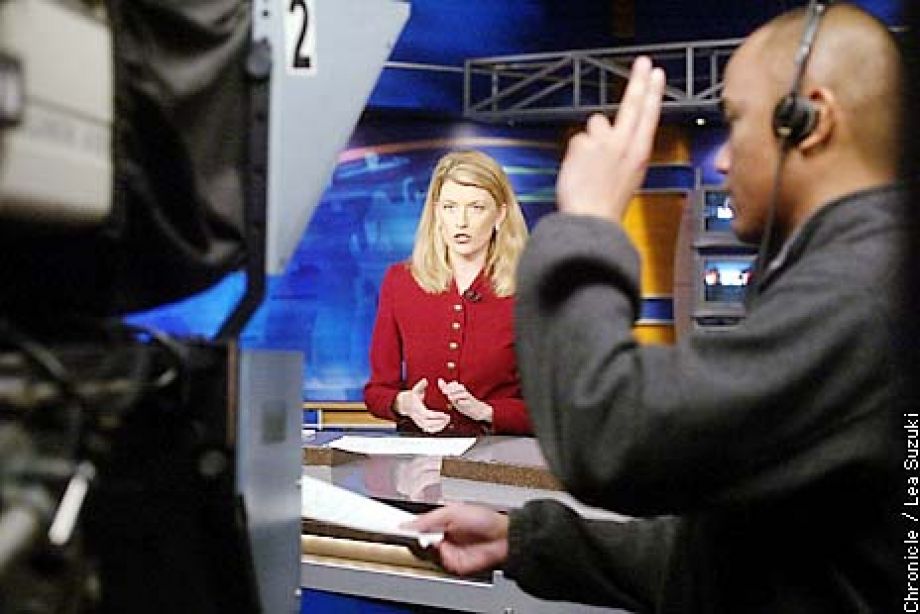
You’re getting flamed in the media. Now what?

I’ve heard this more in the last six weeks than any other time in my 40-year career: We need to get positive press coverage OR we need to STOP this media coverage. The time to leverage or squash media attention is not in the middle of a crisis—it depends entirely on what you do with your public relations and media relationships before panic strikes.

Even in a crisis, PR/Media depends on your objectives. Is your long game about building a positive reputation to attract qualified employees? Are you stemming the loss of distributors? Do you want to highlight your product as a solution to a social need? Or do you just want to stay out of the press?

Before you randomly call a TV station to complain/invite coverage, consider these points.

  • Media coverage can be a silent salesman for you. When your organization is featured with positive press, the implied third-party endorsement of independent media carries more weight than a sell sheet or a paid ad.
  • Your distributors and sales team can use media coverage as a touch point to reach potential customers. If you get a great story—email and blog it to the world.
  • Remember to share the story on multiple platforms. Share links in emails, outbound marketing, social media channels, internal communications and more.
  • Consistent media coverage reaches potential employees—or their mothers. Becoming an employer of choice depends on making a positive impression on people looking for work and their family members egging them on.
  • Killing a story or changing the narrative is usually not successful unless there’s an existing relationship with a media outlet. Simply calling up and claiming you’ve been treated unfairly is a trigger to keep that negative press going. You need to understand what is motivating the media outlet and understand how you can provide another angle on your story.
  • Don’t lie. If you have bad press and it’s true, you have no choice but to own it. Good reporters have refined B.S. detectors and know when someone is covering up the truth. Admit your mistakes, work to correct them, and share your path forward with trusted media outlets. Hiding or saying “no comment” will only prolong the news cycle.

The one final point is to be a wise media consumer. Watch/read/listen to your regional media outlets and be aware of the news cycle and the ongoing coverage. Be wary of national media platforms that create click bait by interviewing politically charged bloviators who mask opinion for objective coverage.

Want more help? If you’re interested, find me at mkathrynschmidt@gmail.com.

I can tell if you’re lying

Good reporters are pretty good at sniffing out a liar. Its because being lied to is a big part of their job. They ask uncomfortable questions in an effort to uncover the truth and if they’re getting really close to a sticky truth, their subjects will divert, evade, and maybe even fake an answer.

After years of interviewing sources and covering the legislature, I became adept at knowing when the interviewee was lying. I think most of this skill was developed by interviewing politicians, but don’t quote me on that correlation.

Experienced reporters develop a second sense to know when the interview is hiding information. It’s part reading body language, part knowing the issue, part asking the right questions, and part getting the subject comfortable and catching them off guard.

It was easier in the pre-internet world to get away with a half-truth. Back then reporters had to cover a beat or really research an issue to know when one person’s reality strayed from the truth. But today, there are too many ways to fact check information with one Google search or find unauthorized cell phone videos on youtube.

So here’s the advice from a professional: don’t lie.

That said you don’t have to divulge the entire truth of your financials (especially if you’re a privately owned company). Before giving that feature story on your corporate performance, before being interviewed on your annual goals, before you make your safety stats public, do some homework.

  1. Research the media outlet and read stories the reporter has published in the past.
  2. Be clear on your key messages. This may require you to do some prep work rather than ripping these off the top of your head.
  3. Anticipate potentially negative issues a reporter may ask and prepare answers for those.
  4. Ask the reporter for questions prior to the interview. Be advised: they are not required to give you the questions and even if they do, they may not follow the script.

You don’t have to put your hand on the Bible and swear to tell the whole truth, but telling no truths will live forever on the Internet.

If you’re interested, find me at mkathrynschmidt@gmail.com.
Sometimes it’s best to just stop talking

In our over communicated, over networked world, we are hard wired to fill the void with information. Self-published video missives abound on YouTube and there’s a talk show for every imaginable topic.

But for grown-up businesses, sometimes the best thing to do is stop talking. In the quest of building a positive image, there is a zeal for over explaining. A former client could not help himself and spilled the beans “confidentially” to a reporter, then was astonished when the information showed up in print.

Unless you have a long relationship with a reporter and have built mutual trust, information is never off the record.

A best practice is to write down key messages and really embrace them so you can confidently and succinctly communicate. Unless you’re an experienced media source, don’t think you’re just going to riff these off with no practice.

Most people who are interview subjects are extremely uncomfortable with silence. The natural reaction in an interview is to keep the conversation going—which is exactly what experienced reporters want.  Be comfortable with stating your response, then stop talking. It’s up to the reporter to ask follow up questions and dig deeper.

Interested in learning more? Drop me a message at mkathrynschmidt@gmail.com.

How to get news coverage in three easy steps

  1. Do something illegal.
  2. Do something immoral.
  3. Do something stupid

And as a bonus, definitely put it all on social media.

As a former reporter and news producer, these are three sure-fired ways to get media coverage. If you’re not inclined to embarrass yourself or your company, try some other suggestions for positive coverage:

  1. Research targeted reporters and editors and find out the kinds of stories that they like to cover. Don’t bother pitching story ideas about financial success to a reporter with a diversity beat—but do figure out how a diverse culture creates financial success. Know your gatekeepers and find stories that trigger their interest.
  2. Is your company first/only/best at a product or service? Don’t discount the news value of being first to market.
  3. What is the story behind a product/service? Find those storytelling opportunities and present case studies that show how the end user moved the needle with your company’s help.
  4. How many experts do you have? God help you if you have a company full of self-appointed experts, but surely there are a few legitimate experts in your field. These thought leaders would be excellent columnists for media platforms.
  5. Are children or animals involved? Sorry for pandering to the media, but if kids or furry creatures are engaged in your business it increases the chances of coverage.

Interested in learning more? Drop me a message at mkathrynschmidt@gmail.com

Freedom of the press and boys behaving badly

Congress shall make no law respecting an establishment of religion, or prohibiting the free exercise thereof; or abridging the freedom of speech, or of the press; or the right of the people peaceably to assemble, and to petition the Government for a redress of grievances.

Let’s talk about freedom of the press—it’s an inalienable right we all share. But when there is bad behavior on both sides, we start to question first amendment rights and access to information. And the consequences thereof.

I listened to the President’s press conference on radio shaking my head in disbelief about the behavior of the press andthe President’s response. The reporters in question exhibited bad behavior, but to hear a sitting President call anyone a “rude, terrible person” denigrates the office.

To get to the rarified air of the White House press corps, journalists and media outlets have to go through approval by the Standing Committee of Correspondents, an association of reporters that approves press passes for Congress. There are background checks, secret service clearance, verification that media outlets are legitimate, and annual review of these checkpoints.

Putting those credentials in jeopardy is generally a bad idea if reporters want to keep their jobs and editors want to maintain access. My friends who are news directors and editors would not condone belligerent behavior—unless it’s on the journey to a truly big story.

For those of you who are civilians and aren’t familiar with the press up close and personal, a few realities. Aggressive, determined reporters are usually rewarded because they get the story. It’s a noxious side effect of our 24/7 news cycle fueled by insta-media online and on cable. There’s always a fine line between a pushy reporter and a hardened journalist.

Frankly, I think CNN’s Jim Acosta performed for his colleagues’ cameras simply to provoke the response from President Trump that he anticipated. There is no greater stage than one that has the potential to reach millions of people online and on air.

It is appropriate for a President (or any person being interviewed) to stop a line of questioning and move on. Usually this is done with a certain amount of professional behavior instead of personally attacking someone. To tell a reporter he/she is a terrible person, then level charges of racism against another reporter, and lash out about “fake news” is petulant and does no honor to the office.

Is this unprecedented behavior? Only because social media amplifies the injustices.

Donald Trump does not have a monopoly on bad relationships with the media. Just look back at Richard Nixon’s war with the Washington Post (for those of you under 40, google “Watergate”). Franklin D. Roosevelt was convinced the newspapers were out to get him. His cousin Theodore was one of the first commanders in chief to use media leaks and spin to manipulate information. Since printed newspapers were considered “new media,” journalists have been banned from the White House and kicked out of the capitol press corps. This relationship is nothing new.

But when access is squeezed repeatedly, we should wake up and take notice. Are journalists being cut off because of personal behavior or because those in power don’t want to consider questions to which the public demands answers ? When elected officials who represent all of us demonstrate repeated disdain of a free press, we need to pay attention.

The American press goes where we do not—to the courts, the state legislatures, the city council meetings, the police departments. Reporters are our eyes and ears, the checks and balances that in some cases hold our public institutions to higher standards. We would like to believe our public institutions always operate with integrity and public interest at heart—but history proves otherwise.

The press is the “fourth estate.” It’s a term that places the press alongside the three branches of government: legislative, executive, and judicial. It gives the press the role of “watchdog” and gives reporters and editors unofficial job description of overseer.

When the press is repeatedly prevented from this role, ask yourself: is the fox watching the hen house?

If you’re interested, find me at mkathrynschmidt@gmail.com.

One man’s bucket list is another’s dream come true

Some days just exist to make you realize why you love what you do.

Meet Florus Schumacher, an 86-year old resident of Touchmark in Appleton’s memory care unit. Several weeks ago, Florus was touring the history museum with her caregiver when she saw a Model T Ford and said riding in one was on her bucket list. That’s when her Touchmark caregiver launched into action. The residence is having a car show this weekend, so one of the exhibitors agreed to bring his Model T in a day early to make her bucket list wish come true.

Florus’ family, grand children, great-grandson, friends and caregivers were on hand for the surprise—as were photographers from WBAY-TV and WLUK-TV. She walked out to a total surprise and got in the restored 1927 Ford with hobbyist Richard Strebel. I asked Florus if she remembered saying the ride was on her bucket list and she said, “Did I? I must have been drunk.” That’s my kind of gal!

Richard built this car from scratch and has been tinkering with it for 20 years. He started when he sold his boat to a guy in Finland, but kept the motor. What else do you do with a boat motor but build a Model T around it? You see, restoring a Model T was on hisbucket list.

How did this all happen? Because a bunch of people who love Florus and a bunch of people who loved the idea of Florus all took time out of their day to make one woman’s wish come true. As for the media, they set aside the bad news of the day to tell the story of how one woman’s wish came true.

It’s easy to target the media for all the bad news of the day because news outlets are the messengers. But when the media takes the time to tell the good news of the day, the heartwarming stories that knit a community together, that’s when the power of the fourth estate is magnified.


Copy. Paste. Now your info is mine.

copyright-culpritSo what do you do when a competitor uses your proprietary information?

Usually, I would tell a client to make sure information has a copyright © sign or they contact their attorneys. However, today everyone’s a publisher thanks to WordPress and everyone’s a journalist thanks to the internet. So “garage journalists” who don’t give a hoot about objectivity, attributing information to sources or vetting the facts will easily copy and paste your proprietary info into their blogs, Facebook pages or tweets.

Recently, we discussed exactly this situation at a business training program with entrepreneurs who have been in business 5-10 years. One businessman (we’ll call him Larry) publishes his own industry information and a competitor has been “borrowing” it liberally for his business without attributing it. Larry’s customers depend on his information and look forward to it in his emails and newsletters. Being a direct guy, Larry has personally asked the guy to stop taking his info.

Does he call a lawyer?

Perhaps. But our solution was to inform his customers and social networks of the situation and have the network get to work. Larry’s customers are fiercely loyal to him—because they are so deeply involved in his lifestyle, products and services they are likely to take this action personally. Larry’s a hard-working guy who lives and breathes his business—his passion attracts equally passionate customers.

You can do everything to protect your information, but often the best weapon is an engaged and committed customer base. Remember to involve your customer in your personal story so they become as dedicated to your product/business as you are. Get your customer involved by regularly communicating with them, presenting a compelling story and providing information that matters to their lifestyles.

I can’t wait to see what happens when his fans find out an interloper is falsely trading on Larry’s sweat-equity.

If you’re interested, find me at mkathrynschmidt@gmail.com.

I’ll give you a minute-15 for that story

tv countdownA journalist friend and I were watching the TV news and after a chirpy, happy report the comment was, “Well, the plow doesn’t go into the ground very deep.” I snorted into my micro-brew and chewed on the evolution of news.

My first news director tossed the state budget at me and told me to find three good stories we could cover that week. These were the days before the internet, even before computers. We had to read through pages of coma-inducing text to find interesting nuggets, prepare a brief on the story with pro and con sources and propose visuals to film. Did you notice I said film instead of video? Look it up on Wikipedia.

My first producer had a rule: 1:15 for any story (including the anchor’s lead in). I would come back to the newsroom begging for an extra 10-seconds and he would look up at me from his manual typewriter and say “Did anyone die?” No I would answer. “Big. You have 1:15 and don’t go over.” It forced brevity.

When I started in TV news, all reporters needed to understand the legislative process, how the state house worked, how the city council proposed ordinances and how the county board intersected with the council. We needed a functional knowledge of the courts and an excellent knowledge of journalist’s rights in the courtroom.

Most of today’s local reporters don’t do a deep dive in civics—and I’m not certain it’s their fault. Local news departments are chasing content for a shrinking news hole. Cable stations tip the scale in the opposite direction airing mind-numbing interviews that present opinion as fact. And all of us want more news about the weather.

I’d like to blame “Entertainment Tonight.” We are bombed by celebrity news, live shots, and stories that don’t last longer than a sneeze. Our nation of terminally ADD citizens looks for clarity in 140 words, but some issues can’t be explained in a tweet. Budgets and legislation WILL affect your life, but do you blame the media then never search out the facts for yourself?

If you want an issue or an event covered, you may be working with a reporter who has done little research and has to cover multiple stories in one day.

With luck, one of those stories might get 1:30, but cut down to :40 for the late news. Can you communicate the benefit of your product or service in two minutes let alone 40 seconds? Think about how long a local news story will be when it’s in finished form and challenge yourself to communicate with brevity and impact. Oh yeah, and don’t forget to be creative.

If you’re interested, find me at mkathrynschmidt@gmail.com.

Your talkin’ English, an’ so?

grammar naziSo English is officially our official language and I think it’s a GREAT idea. In fact, I think it’s so great; all red-blooded American citizens who’ve been in this country for several generations should step up and do their part to actually learn their language. As I see it, there are two issues with English as our official language—one is based in our past; the other is based in our future.

I’m from Mi’waukee (if you’re a native you never pronounce the “l.”) Truth: I’ve asked someone to “come by me once” and my mother asked me to “reach me down the diapers from the top shelf, once.”

When I followed my husband “up nort” I learned an affirmative was “oh, yaaaaah” and punctuated by “fer da crie!” I got used to it when we stopped at a friend’s house for “one, two, tree beeres” but was confused when she ended every sentence with “an’ so?” Until someone told me she was saying “and so” I thought she had recently lived in Germany.

Now add the Dutch, Norwegian, Belgian, and Polish into the mix and the mother tongue becomes even more muddied. And I wonder how it will affect the future.

Our new lingo is fueled by speed and designed for iPads and cell phone keypads. And it’s trickling into tweets, texts, Vimeo and more.

Be becomes B, why becomes Y, see turns into C, okay is K, and two, to and too are all 2. Is it enough that most people interchange your and you’re but in our new shorthand ur is the rule?

We’ve moved from a world where we read the printed word to a world where we listen to it. And we don’t make much time to do either. In business, we ask WIIFM and request to have items EOD before TGIF.

So if you combine the new cyberslang with our Wisconsin dialect, do you get statements like: “CUL8R for beers, once?”

The English language is richly beautiful because it borrows and changes words from different cultures, new immigrants and emerging trends. It will continue to evolve. But we have to remember that you can’t learn to improvise until you first learn the melody, so learn English as a national language for everyone, not just new citizens.

G2G. K?

If you’re interested, find me at mkathrynschmidt@gmail.com.

What does that “www” thing mean?

1990s-problemHi, my name is Mary and I’m addicted to social media. The first step toward recovery is to admit your problem and I should have seen this coming about 100 posts ago. At least once a week someone tells me social media is a pointless waste of time. Some clients can’t imagine why anyone would spend time on a screen. Spousal Unit moaned in disgust when he found out I was taking pictures of myself and posting them to Facebook and Twitter to stave off boredom in the deer stand during a hunting season. Now, my hunting posts on Facebook are eagerly anticipated by clients and friends alike. Here’s what I have to say to them.

My 75-year old father has a Facebook page. That either makes him a hip adaptor or it makes Facebook terminally un-cool, but you can’t ignore it.

I’m showing my age, but as a TV reporter in the 80s, we laughed at the idea of 24-hour news on a cable network. What would they cover? In the early days of the internet, employers and clients told me no one would ever get product information on a screen much less write and send letters over a computer.

The idea behind social media is to connect, participate, discuss. No restrictions and opinions interpreted as news. Is it perfect? Nothing is perfect and I’ve found that people who make questionable decisions in other parts of their lives will do the same thing on social media. But like they say, you can pick your friends.