Copy. Paste. Now your info is mine.

copyright-culpritSo what do you do when a competitor uses your proprietary information?

Usually, I would tell a client to make sure information has a copyright © sign or they contact their attorneys. However, today everyone’s a publisher thanks to WordPress and everyone’s a journalist thanks to the internet. So “garage journalists” who don’t give a hoot about objectivity, attributing information to sources or vetting the facts will easily copy and paste your proprietary info into their blogs, Facebook pages or tweets.

Recently, we discussed exactly this situation at a business training program with entrepreneurs who have been in business 5-10 years. One businessman (we’ll call him Larry) publishes his own industry information and a competitor has been “borrowing” it liberally for his business without attributing it. Larry’s customers depend on his information and look forward to it in his emails and newsletters. Being a direct guy, Larry has personally asked the guy to stop taking his info.

Does he call a lawyer?

Perhaps. But our solution was to inform his customers and social networks of the situation and have the network get to work. Larry’s customers are fiercely loyal to him—because they are so deeply involved in his lifestyle, products and services they are likely to take this action personally. Larry’s a hard-working guy who lives and breathes his business—his passion attracts equally passionate customers.

You can do everything to protect your information, but often the best weapon is an engaged and committed customer base. Remember to involve your customer in your personal story so they become as dedicated to your product/business as you are. Get your customer involved by regularly communicating with them, presenting a compelling story and providing information that matters to their lifestyles.

I can’t wait to see what happens when his fans find out an interloper is falsely trading on Larry’s sweat-equity.

If you’re interested, find me at mkathrynschmidt@gmail.com.
I’ll give you a minute-15 for that story

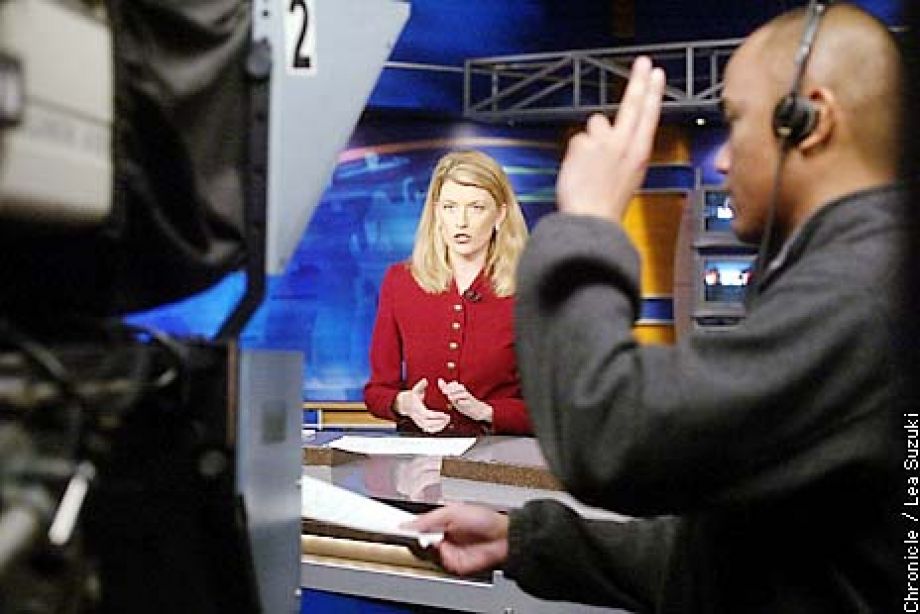
tv countdownA journalist friend and I were watching the TV news and after a chirpy, happy report the comment was, “Well, the plow doesn’t go into the ground very deep.” I snorted into my micro-brew and chewed on the evolution of news.

My first news director tossed the state budget at me and told me to find three good stories we could cover that week. These were the days before the internet, even before computers. We had to read through pages of coma-inducing text to find interesting nuggets, prepare a brief on the story with pro and con sources and propose visuals to film. Did you notice I said film instead of video? Look it up on Wikipedia.

My first producer had a rule: 1:15 for any story (including the anchor’s lead in). I would come back to the newsroom begging for an extra 10-seconds and he would look up at me from his manual typewriter and say “Did anyone die?” No I would answer. “Big. You have 1:15 and don’t go over.” It forced brevity.

When I started in TV news, all reporters needed to understand the legislative process, how the state house worked, how the city council proposed ordinances and how the county board intersected with the council. We needed a functional knowledge of the courts and an excellent knowledge of journalist’s rights in the courtroom.

Most of today’s local reporters don’t do a deep dive in civics—and I’m not certain it’s their fault. Local news departments are chasing content for a shrinking news hole. Cable stations tip the scale in the opposite direction airing mind-numbing interviews that present opinion as fact. And all of us want more news about the weather.

I’d like to blame “Entertainment Tonight.” We are bombed by celebrity news, live shots, and stories that don’t last longer than a sneeze. Our nation of terminally ADD citizens looks for clarity in 140 words, but some issues can’t be explained in a tweet. Budgets and legislation WILL affect your life, but do you blame the media then never search out the facts for yourself?

If you want an issue or an event covered, you may be working with a reporter who has done little research and has to cover multiple stories in one day.

With luck, one of those stories might get 1:30, but cut down to :40 for the late news. Can you communicate the benefit of your product or service in two minutes let alone 40 seconds? Think about how long a local news story will be when it’s in finished form and challenge yourself to communicate with brevity and impact. Oh yeah, and don’t forget to be creative.

If you’re interested, find me at mkathrynschmidt@gmail.com.

So how are those staff cuts working for ya?

shits fired bullshit

My network of reporter/editor friends got some great chuckles out of recent gaffes in regional papers. Nothing entertains a bunch of journalists like implied (or actual) swear words in 36 point type. When you traffic in the printed or spoken word, mistakes are part of the landscape.

Usually an editor reviews final copy before it hits production or the air. Veteran journalists are fairly trustworthy when writing copy or headlines. But that’s just the problem—there aren’t many veteran journalists left.

In the last months, print newsrooms across the country have been slashed to the bone with budget cuts. Staffers with seniority and higher wages based on experience and ability have been trimmed from the balance sheet—along with their institutional knowledge. We can argue the failing business model of newspapers all day long and blame everything on the internet, but there’s a bigger issue here.

Trust me on this: you WANT experienced journalists on the job if only to perform their most important function as a watchdog. That’s an old-fashioned term that has a lot of modern implications.

In your busy life, will you ever attend a city council meeting? Do you have time to sit through floor debate at the legislature? Do you know your elected officials, your zoning committee or your school board personally?

You want a reporter at these meetings questioning why legislation is being proposed. You want a reporter asking why a zoning variance is being granted to a developer. You need a reporter following policy changes that could affect your childrens’ schools.

Journalists are trained to be the fourth estate—the unofficial branch of the government that monitors the political process to ensure the players don’t abuse the democratic process. That means they watch, they listen, they ask questions. But now there are fewer on the street asking those questions.

Journalists are also bound by a code of ethics in their newsroom and answer to editors who verify sources, strive for objectivity and hold them accountable. Sure, you can always find out more on the internet, but it’s caveat emptor. How do you know the author has checked sources or even if the author is a real person? And with a nod to history, most web-based content is only slightly better than the yellow journalism of 1900.

I never thought I would see the day when a local TV newsroom has more feet on the ground than the local paper. But that day is here.

If you’re interested, find me at mkathrynschmidt@gmail.com.

Why stormageddon is a bust

snowmageddonIt’s tempting to blame the national weather hysteria on Al Gore or the movie “The Day After Tomorrow” but there’s a less fictional cause. Local news markets have been engulfed in the weather as news vortex for years, but now the national networks are catching up.

Why? Because when the companies that own local TV stations pay for expensive research, the results show one of the top reasons why people watch TV news is weather. They want to know if storms will disrupt the work week, vacation plans or the Friday golf game. So any weather event, no matter how insignificant, instantly becomes a live shot.

One of the best sources of credible information in the changing media landscape is the Pew Research Center on Journalism & the Media. Checking one of their most recent reports shows that between 2005 and 2013…

“…the airtime devoted to weather, traffic and sports had risen from 32% of the local newscast studied to 40% —a 25% increase. Indeed, Pew Research’s examination of 48 evening and morning newscasts in late 2012 and early 2013 found that 20 of them led with a weather report or story.”

Just another symptom of the nanny state—citizens can’t be trusted to source information on their own, so we will barrage them with the obvious. My favorite are the national morning “news” programs that feature a breathless, over-the-top reporter lamenting cars in a ditch, or zero visibility, or the chore of plowing. Obviously a reporter/producer team that has never been west of Philly.

The true tragedy is not that hyper reporters over-deliver the obvious—all of us have lost something far more dear. We have lost the opportunity to learn about stories that have more lasting impact in favor of 5 minutes of live shots from weather non-stories. Certainly proposed congressional legislation is “boring,” but truly creative journalists can find a way to make a budget or committee action compelling.

If you don’t like what you see, don’t remain silent and flip the channel. Send an email to your local news director or station manager/owner and tell him or her what you want to learn from their programs. If enough of you do that, you might save us from stormageddon.

TAKE YOUR BEST SHOT

The happy morning news anchors greeted me with this headline: “Shots fired in Green Bay.” Now that’ll make you sit up. Where? Who? Was it a school? I flipped to another station and got the grave headline: “Shooting on campus.” Which campus? Spousal Unit tuned the kitchen radio into the all-news station but all we got was “Shooting in Green Bay.”

The anchors reported that information was still coming in, police reports were not updated, reporters were en route to the scene, more information would be available shortly, we’ll keep you informed, and on and on…

Several hours later I learned the “shooting” was actually three shots fired. The incident was not on a school campus but on the east side of the city near the University campus. As for the immediacy, it happened overnight.

The producers and writers did their jobs well this morning. The headline “Shots fired in Green Bay” made my heart beat faster. Had they used the more accurate headline “Shots fired near University overnight,” I would have realized the incident was not ongoing,

When there’s breaking news at your business or organization, keep this in mind.

It might be a dumpster fire but it could be reported like this: “Rescue units and a tanker truck were called out overnight to a fire at XYZ Company…”

Is this wrong or misleading? Nope—and I would do the same thing if I were still working in a newsroom.

You owe it to yourself, your employees and your customers to learn how news is communicated and why reporters and editors do what they do. Before you see it posted on Facebook.

If you’re interested, find me at mkathrynschmidt@gmail.com.

Your talkin’ English, an’ so?

grammar naziSo English is officially our official language and I think it’s a GREAT idea. In fact, I think it’s so great; all red-blooded American citizens who’ve been in this country for several generations should step up and do their part to actually learn their language. As I see it, there are two issues with English as our official language—one is based in our past; the other is based in our future.

I’m from Mi’waukee (if you’re a native you never pronounce the “l.”) Truth: I’ve asked someone to “come by me once” and my mother asked me to “reach me down the diapers from the top shelf, once.”

When I followed my husband “up nort” I learned an affirmative was “oh, yaaaaah” and punctuated by “fer da crie!” I got used to it when we stopped at a friend’s house for “one, two, tree beeres” but was confused when she ended every sentence with “an’ so?” Until someone told me she was saying “and so” I thought she had recently lived in Germany.

Now add the Dutch, Norwegian, Belgian, and Polish into the mix and the mother tongue becomes even more muddied. And I wonder how it will affect the future.

Our new lingo is fueled by speed and designed for iPads and cell phone keypads. And it’s trickling into tweets, texts, Vimeo and more.

Be becomes B, why becomes Y, see turns into C, okay is K, and two, to and too are all 2. Is it enough that most people interchange your and you’re but in our new shorthand ur is the rule?

We’ve moved from a world where we read the printed word to a world where we listen to it. And we don’t make much time to do either. In business, we ask WIIFM and request to have items EOD before TGIF.

So if you combine the new cyberslang with our Wisconsin dialect, do you get statements like: “CUL8R for beers, once?”

The English language is richly beautiful because it borrows and changes words from different cultures, new immigrants and emerging trends. It will continue to evolve. But we have to remember that you can’t learn to improvise until you first learn the melody, so learn English as a national language for everyone, not just new citizens.

G2G. K?

If you’re interested, find me at mkathrynschmidt@gmail.com.

Tornado, Ice and Storms: oh my!

tv attackWelcome to Spring in Wisconsin where a cocktail of ice, snow, rain and winds could knock us off the grid at any time.

Most businesses don’t consider man-made or natural disasters in their annual planning, but ignore at your own peril. Not only do we live in a world of instant business, we live in a world of instant news. If disaster hits your business, there’s a good chance it will be on a media website or blog before you notify your employees or key customers.

The people who are in the business of covering disasters have crisis plans in place. When 9/11 stopped Americans in their tracks, most newsrooms across the country had “plan A” and “plan B” in place and put reporters and editors on 24/7 call. When storms hit, local TV stations are live from multiple locations immediately. The media is ready to cover you if you are the center of a disaster—are you as ready as the media?

The worst time to plan for a crisis is when you’re knee deep in one. There are a few common sense things to plan for—and a few things you might not readily think of.

Define your crisis: Before an emergency hits, determine what types of crises require you be ready for media response. Tornadoes and fires are an easy call—but does a robbery or an employee theft warrant a full-scale crisis response?

Prepare your team: Identify a first response team, usually key executives in your business and a communications or PR professional. If you don’t have PR counsel on staff, consider outsourcing this function during a crisis

Plan your communications: Determine what you will say to your employees, your customers and the media. Identify a spokesperson, but make sure all members of your crisis team are briefed.

Be up front with your team: Make certain all employees know where they can call or check in if there is a disaster so they can stay informed with factual, up-to-date information. In a disaster or crisis, a good reporter will not politely call the receptionist and leave a message for your spokesperson. A good reporter will wander around to the loading dock, start talking to your drivers, call surrounding business neighbors and put your janitor on camera.  How do I know this is true? Because I did each one of these things to get a story.

I wouldn’t advocate adding a “disaster” column to your monthly spreadsheet, but a little pre-planning can avert some big problems. And for those of you who are still saying it’ll never happen here; just remember that Noah built the ark before it started to rain.