Courage to be Dan Rather

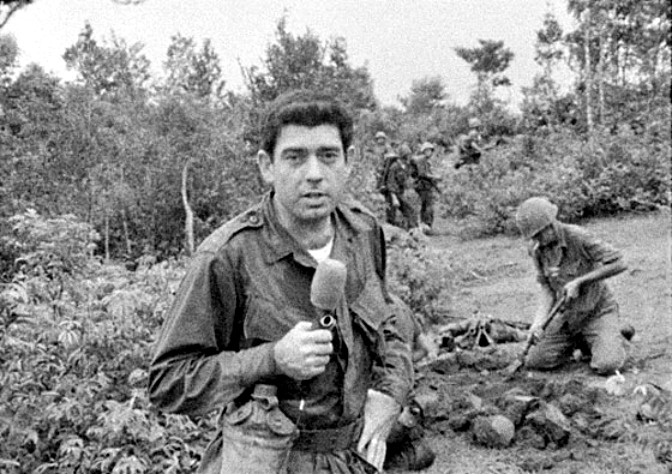
This post is for all you under 40 PR/comm types out there. When I was growing up, the Vietnam War played nightly on Walter Cronkite. Then, Watergate was the top story that consumed the national discussion. Through it all, Dan Rather was on location or in the anchor chair. Remember this was before cell phones and the internet gave us a 24/7 news cycle and people actually stopped what they were doing to watch the evening news.

For those of you who live and die by the feed on your cell phones, this was important because what happened on the evening news was a shared experience. It’s how we were updated on that day’s news, then we read the details in the next days’ newspaper (remember newspapers?). No Twitter postings* from un-vetted “news sources” or opinion leaders who might or might not have all the facts. It was widely regarded as objective reporting from trained journalists.

So why care? Do yourself a favor and watch the documentary Rather. Go ahead and make fun of Dan Rather for his good looks, his stupid sign off (Courage), or his epic mistake and departure from CBS…but this was the peak of TV journalism. And the guy is 92 and still in the game posting coherent comments on Twitter and other platforms. I love a second act.

Watergate, Woodward/Bernstein, and the aftermath made me want to be a journalist. Dan Rather’s documentary shows how TV journalism was before cell phones made everyone an alleged reporter. Watch it.

*I will NEVER call Twitter “X” because it’s just stupid.

This post was NOT written by ChatGPT

Over the last few months, I’ve been experimenting with ChatGPT. I even asked it to write this article about how journalists could use ChatGPT and it spewed out 437 words on how it was a tool that could sift through vast amounts of information to uncover the truth. It even created fake story lines about make-believe journalists who used it to report stories that never happened. In short, a fairy tale.

Artificial Intelligence and ChatGPT learn grammar, syntax, semantics, and even some level of reasoning and context to mimic human speech and communications. They suck up existing information on the internet and regurgitate it according to the question you pose.

And we all know information on the internet is true, don’t we?

If there’s a data void, ChatGPT will usually not answer a question by saying it does not know the answer, but it will make up an answer. Unless you are extremely specific—I asked it “what is the future of land use in Cooperstown, Wisconsin” and it did reply As of my last update, I don’t have access to information about the specific future developments or plans for land use in Cooperstown, WI.

The reality is most journalists are in the business of reporting new information (hence the term “news”). If they’re local reporters, chances are the internet data dump does not have the latest info on the workings of a local school board or a common council or a court proceeding.

So will ChatGPT supplant local journalism? The reality is scooping information off the internet cannot be trusted. We will still need reporters and editors to vet information, double check sources, or to present the human impact of the news.

Just ask ChatGPT—it’ll tell you that AI models “may not be able to fully replace local news.” At least that much is true.

Tik Tok Boom.

This is the day I shake my head and graduate to full-on old fogie. Read this report by Reuters (a trusted, legacy media source) about how a growing number of young people are turning to TikTok for news and information. The platform launched by the Chinese company Bytedance has graduated from dancing videos to delivering the news and, as one user reported, “…where it lacks in trustworthiness, it excels in presentation.”

Ok, all together now: face palm.

Why should you care? Because tomorrow’s voters and tomorrow’s wage earners are getting “news” that is increasingly created by individuals and organizations that have a high potential for dis- and misinformation. Never mind that venerable organizations like the BBC, the Washington Post, and the 4-Cs (ABC, NBC, CBS, CNN) have all entered the fray, it’s the creators who are not journalists that should make you cringe.

“…others fear that the ‘TikTok-ification of news’ risks trivialising important stories as well as undermining business models that depend on referral traffic from social networks.”

Journalists are trained to present information in a vetted, objective format. There’s a certain trust that legacy media outlets are telling the truth and have checked their sources. Unfortunately, other producers on TikTok are masquerading as real, live reporters.

I’m not proposing that all journalists are trustworthy, but repeated surveys by Reuters, the Pew Center for Journalism, and other platforms regularly rate the bias of legacy news organizations. You’d be surprised to learn that most well-known outlets are ranked in the middle of the pack in terms of bias.

That’s why they’re looking for fresh, young content creators to bend the rules of journalism in a balance between objective reporting and humor-filled TikTok reels. Fifty years ago, television was the new medium hiring journalists who actually looked attractive to deliver news on the air. Broadcasters were criticized for hiring pretty people to deliver the news. Now hoodie-wearing millennials are cheerfully presenting information to attract the elusive  younger market—a market that is increasingly more difficult to target.

TikTok as a news platform? Where’s that “freedom of the press thing” in China?

If you’re interested, find me at mkathrynschmidt@gmail.com.

SALE! Your next elected official

What’s the biggest sale you can think of?

Black Friday? No.

Day after Christmas? Nope.

Back to School? Wrong.

It’s elections.

Candidates and special interest groups have only one day to determine who wins the big prize (Ok, there is advance voting, but you get the picture). In the lead up to that one day, there are more ads running than any of the aforementioned retail sales and the biggest platform is television. Based on recent reports, Wisconsin races have spent more money than any other state to get you to take action on November 8.

A new study by the Wesleyan Media Project, shows the races for governor and U.S. Senate have resulted in 24,000 ad airings statewide in just two weeks. It’s estimated Gov. Tony Evers and challenger Tim Michels have spent $55 million to get their next job. In the senate race both Ron Johnson and Mandela Barnes have dropped $89 million since the August primary.

And it all comes down to a federal law from 1934.

TV stations cannot refuse political advertising and must allow “reasonable access” to legally qualified candidates. If they refuse the ads, they run the risk of losing their broadcast licenses. Further, stations have to give the candidates the lowest rates on their advertising rate cards, but as commercial availability tightens the closer we get to elections, the volume of the ads climbs.

The Communications Act of 1934 lays this all out if you’re interested. In 1934 it focused on radio, but the Federal Communications Commission fleshed out the rules for television, then cable, then satellite.

For everyone who says legacy media is dead and digital platforms are dealing the fatal blow, just turn on the TV. Television still delivers a high-volume, broad-based audience and local news can still be considered “appointment viewing.” So suck it up and stay tuned until November 9 when the ads may stop, but the revenues keep rolling in for the local market stations.

Print media: to profit or non-profit?

Legacy media is changing faster than you can say “OK, Boomer.”

I’m old enough to remember when the shift from paper journalism to televised journalism signaled the death of the printed newspaper, which didn’t really happen. It changed how editors made news decisions, but didn’t obliterate print. I remember a TV news director telling me early in my career that we were tasked with explaining what is happening right now and the paper would fill in the details.

Now, many broadcast and social sites have more news gathering resources at their disposal than print platforms.

Many of my friends who have 20, 30, even 40 years as print journalists have already turned to the dark side of PR and marketing. I say dark side because many experienced journalists would turn their nose up at these career moves and regarded them as selling out. As print newsrooms across the country are gutted, the concept of “selling out” looks attractive when it comes with a dependable paycheck and benefits.

So what’s next for a medium that has been around since Gutenberg pressed ink into vellum?

Models of a non-profit approach to print journalism are being deployed in several communities. Much like public radio, these platforms use a hybrid of donations and advertising generated revenue to underwrite their efforts. (I get it, advertising is really sponsorships but it’s essentially the same.) One such example is the American Journalism Project which makes grants to non-profit organizations that are launching mission-based newsrooms with a focus on local reporting. https://www.theajp.org/why-local-news/

Most major news gathering outlets focus on national or international topics. Reporting on school boards, city councils, highway departments, or planning commissions is boring stuff. Unfortunately these are the topics that directly affect our daily lives. As we’ve seen with recent protests at school board meetings, these are the organizations that impact our kids and our communities.

What would happen if this level of reporting dissolves? It means that we either take the initiative to attend those plan commission meetings as interested citizens, or we look for journalists to be our eyes and ears.

Take a minute and look at what the American Journalism Project is doing–and remember that a free press is really no longer free.

The real pandemic: media hype

There’s no cure. There’s no vaccination. There are no protective measures—short of unplugging.

I’ve been asked by my clients why the media is in a feeding frenzy over COVID-19 and it all boils down to click bait. Editors are crafting tittilating headlines and updates to get you to click on a tweet that takes you to their website. It’s all about social media hits, web traffic and trending topics—editorial judgement be damned.

And it all starts at the top—networks and legacy journalism platforms are feeding the fever. This morning the first 15 minutes of the network news was pandemic centered, and in broadcast news 15 minutes is an eternity. Then it trickles down to local media outlets who are scouring their markets for people related to those in quarantine, residents cancelling cruises, businesses grounding their workforce, and schools shutting down.

Why? A few reasons:

  • Consumers have a 140-character attention span. If a news story requires you to invest time to read, understand, and contemplate content, it won’t make the editorial cut. A school referendum will have more long-range consequences for a community, but tax levies can be complicated and few reporters have the creativity to actually tell a story (Storytelling: the new buzz of 2020 that’s actually been around for decades in newsrooms). It’s easier to click on a headline about cancelling cruises than read about how schools are funded.
  • Fear is sexy. When media outlets leave with you with more questions than answers, you will access their platforms more frequently to stay updated.
  • Editorial judgement has been replaced by trending stories. Editorial judgment means experienced journalists would consider all the issues on any one day, then select those that had the biggest impact on their audience, the potential for future impact, or topics that were unusual (read “man bites dog). Now, content editors first check social media for trending topics and use that to guide how stories are selected and which ones get the most play. The social media habits of people clicking on the Kardashians are influencing what is “news” in our local communities.

I would never advocate ignoring social platforms as communications channels—they are here to stay just as TV was in the 1950s. But somewhere in this frenzy perhaps objective reporting could give us a wider perspective.  Perhaps editorial staffs could remember that citizens learn little if all media does is parrot the flavor of the day.

Perhaps the best news out of this issue is the federal government may delay April 15 tax filings. Think that’ll make the Twitter feed?

Really, it’s not all about you

copy editThis is for all you business people who are on the 16th revision of a press release and are reworking the perfectly constructed corporate statement about a product introduction or a new project or an industry award. It really isn’t about you.

That press release with jargon or obtuse information is likely the first thing an experienced journalist will delete. Your first gatekeeper in getting any story out to the masses is the editor or reporter. This person likely gets a couple hundred emails and press releases a day. When they decide which stories will get a precious minute of air time or a few column inches, they’re taking many things into consideration. One of them is NOT your press release, your poetic phrases, or your schedule.

My client was able to get a feature story covered on a special award because the executives were flexible and available when the media needed them. A busy news weekend and conflicting logistics meant news crews had to compress coverage of an award event to get to another story an hour away.

The crews arrived early, they were able to finish interviews before the event, got the video they needed and were on the road in about 45 minutes.

The result? Coverage by the ABC and FOX networks in town, a feature story in an industry trade magazine and a feature story covered later by the daily paper.

When you think about hosting an event or creating a timeline, remember to plan in flexibility so your message is available when the media wants it—not when you need to deliver it.

If you’re interested, find me at mkathrynschmidt@gmail.com.

I’ll give you a minute-15 for that story

tv countdownA journalist friend and I were watching the TV news and after a chirpy, happy report the comment was, “Well, the plow doesn’t go into the ground very deep.” I snorted into my micro-brew and chewed on the evolution of news.

My first news director tossed the state budget at me and told me to find three good stories we could cover that week. These were the days before the internet, even before computers. We had to read through pages of coma-inducing text to find interesting nuggets, prepare a brief on the story with pro and con sources and propose visuals to film. Did you notice I said film instead of video? Look it up on Wikipedia.

My first producer had a rule: 1:15 for any story (including the anchor’s lead in). I would come back to the newsroom begging for an extra 10-seconds and he would look up at me from his manual typewriter and say “Did anyone die?” No I would answer. “Big. You have 1:15 and don’t go over.” It forced brevity.

When I started in TV news, all reporters needed to understand the legislative process, how the state house worked, how the city council proposed ordinances and how the county board intersected with the council. We needed a functional knowledge of the courts and an excellent knowledge of journalist’s rights in the courtroom.

Most of today’s local reporters don’t do a deep dive in civics—and I’m not certain it’s their fault. Local news departments are chasing content for a shrinking news hole. Cable stations tip the scale in the opposite direction airing mind-numbing interviews that present opinion as fact. And all of us want more news about the weather.

I’d like to blame “Entertainment Tonight.” We are bombed by celebrity news, live shots, and stories that don’t last longer than a sneeze. Our nation of terminally ADD citizens looks for clarity in 140 words, but some issues can’t be explained in a tweet. Budgets and legislation WILL affect your life, but do you blame the media then never search out the facts for yourself?

If you want an issue or an event covered, you may be working with a reporter who has done little research and has to cover multiple stories in one day.

With luck, one of those stories might get 1:30, but cut down to :40 for the late news. Can you communicate the benefit of your product or service in two minutes let alone 40 seconds? Think about how long a local news story will be when it’s in finished form and challenge yourself to communicate with brevity and impact. Oh yeah, and don’t forget to be creative.

If you’re interested, find me at mkathrynschmidt@gmail.com.

So how are those staff cuts working for ya?

shits fired bullshit

My network of reporter/editor friends got some great chuckles out of recent gaffes in regional papers. Nothing entertains a bunch of journalists like implied (or actual) swear words in 36 point type. When you traffic in the printed or spoken word, mistakes are part of the landscape.

Usually an editor reviews final copy before it hits production or the air. Veteran journalists are fairly trustworthy when writing copy or headlines. But that’s just the problem—there aren’t many veteran journalists left.

In the last months, print newsrooms across the country have been slashed to the bone with budget cuts. Staffers with seniority and higher wages based on experience and ability have been trimmed from the balance sheet—along with their institutional knowledge. We can argue the failing business model of newspapers all day long and blame everything on the internet, but there’s a bigger issue here.

Trust me on this: you WANT experienced journalists on the job if only to perform their most important function as a watchdog. That’s an old-fashioned term that has a lot of modern implications.

In your busy life, will you ever attend a city council meeting? Do you have time to sit through floor debate at the legislature? Do you know your elected officials, your zoning committee or your school board personally?

You want a reporter at these meetings questioning why legislation is being proposed. You want a reporter asking why a zoning variance is being granted to a developer. You need a reporter following policy changes that could affect your childrens’ schools.

Journalists are trained to be the fourth estate—the unofficial branch of the government that monitors the political process to ensure the players don’t abuse the democratic process. That means they watch, they listen, they ask questions. But now there are fewer on the street asking those questions.

Journalists are also bound by a code of ethics in their newsroom and answer to editors who verify sources, strive for objectivity and hold them accountable. Sure, you can always find out more on the internet, but it’s caveat emptor. How do you know the author has checked sources or even if the author is a real person? And with a nod to history, most web-based content is only slightly better than the yellow journalism of 1900.

I never thought I would see the day when a local TV newsroom has more feet on the ground than the local paper. But that day is here.

If you’re interested, find me at mkathrynschmidt@gmail.com.

Why stormageddon is a bust

snowmageddonIt’s tempting to blame the national weather hysteria on Al Gore or the movie “The Day After Tomorrow” but there’s a less fictional cause. Local news markets have been engulfed in the weather as news vortex for years, but now the national networks are catching up.

Why? Because when the companies that own local TV stations pay for expensive research, the results show one of the top reasons why people watch TV news is weather. They want to know if storms will disrupt the work week, vacation plans or the Friday golf game. So any weather event, no matter how insignificant, instantly becomes a live shot.

One of the best sources of credible information in the changing media landscape is the Pew Research Center on Journalism & the Media. Checking one of their most recent reports shows that between 2005 and 2013…

“…the airtime devoted to weather, traffic and sports had risen from 32% of the local newscast studied to 40% —a 25% increase. Indeed, Pew Research’s examination of 48 evening and morning newscasts in late 2012 and early 2013 found that 20 of them led with a weather report or story.”

Just another symptom of the nanny state—citizens can’t be trusted to source information on their own, so we will barrage them with the obvious. My favorite are the national morning “news” programs that feature a breathless, over-the-top reporter lamenting cars in a ditch, or zero visibility, or the chore of plowing. Obviously a reporter/producer team that has never been west of Philly.

The true tragedy is not that hyper reporters over-deliver the obvious—all of us have lost something far more dear. We have lost the opportunity to learn about stories that have more lasting impact in favor of 5 minutes of live shots from weather non-stories. Certainly proposed congressional legislation is “boring,” but truly creative journalists can find a way to make a budget or committee action compelling.

If you don’t like what you see, don’t remain silent and flip the channel. Send an email to your local news director or station manager/owner and tell him or her what you want to learn from their programs. If enough of you do that, you might save us from stormageddon.